


Raspberry Pi Pico 2 W: The Tiny Powerhouse That’s Redefining Embedded Systems

Raspberry Pi Pico 2 W: The Tiny Powerhouse That’s Redefining Embedded Systems
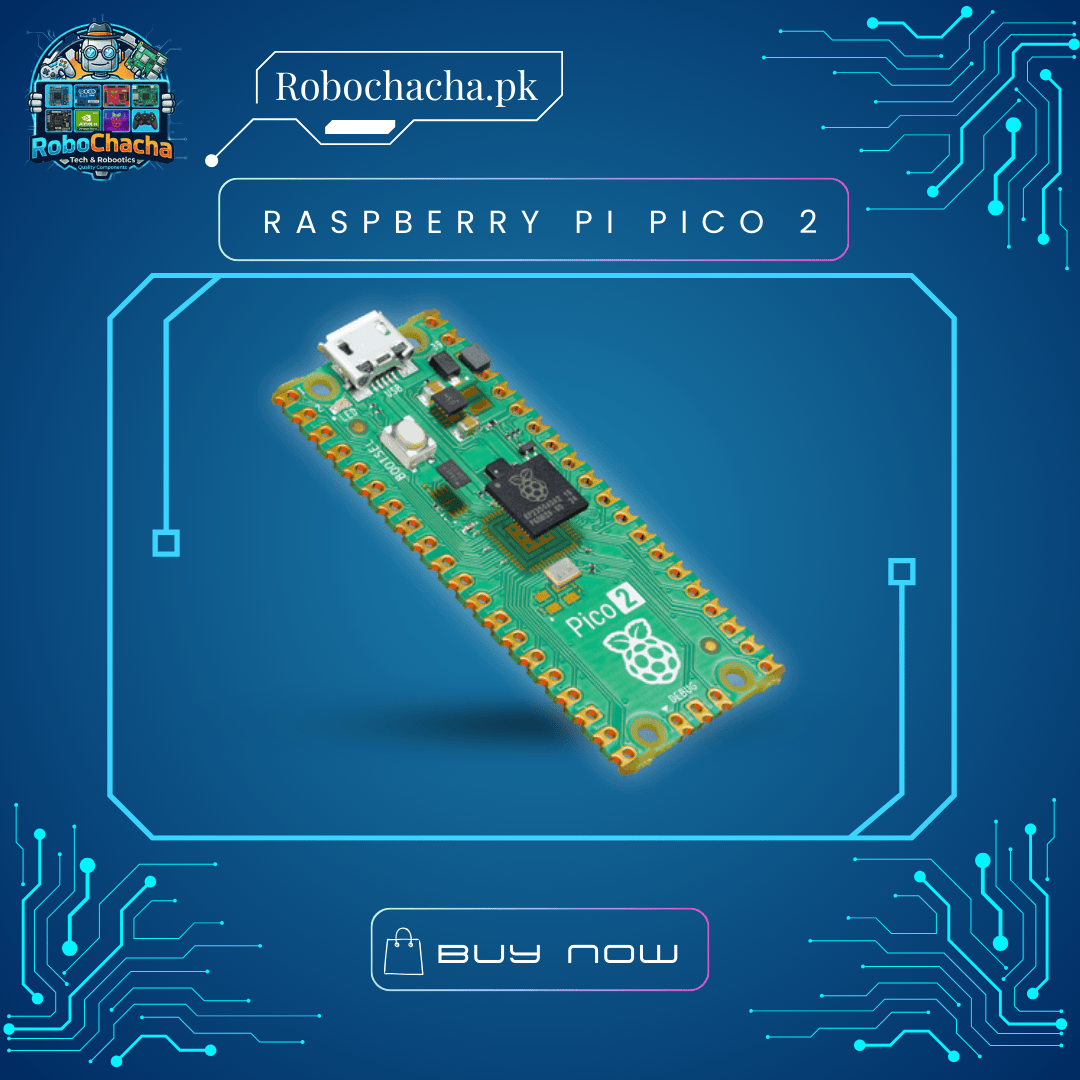
The embedded systems world has evolved rapidly over the past few years, and one board has generated significant excitement among makers, engineers, educators, and product developers alike—the Raspberry Pi Pico 2 W. Built around the all-new RP2350 microcontroller, the Pico 2 W combines higher performance, wireless connectivity, enhanced security, and impressive flexibility, all while maintaining compatibility with the hugely successful Pico ecosystem.
Whether you’re building an IoT device, an industrial controller, a robot, or simply learning embedded programming, the Pico 2 W deserves a place in your toolbox.
If you’re looking for genuine Raspberry Pi boards, robotics kits, sensors, and embedded development hardware in Pakistan, visit RoboChacha at Robochacha.pk In Pkistan for authentic products and local support.
What Makes the Raspberry Pi Pico 2 W Special?
Unlike a traditional Raspberry Pi computer running Linux, the Pico 2 W is a microcontroller development board designed for deterministic real-time applications. It boots almost instantly, consumes very little power, and can directly control hardware without an operating system.
The biggest upgrade comes from the new RP2350 chip, which significantly improves on the original RP2040 while remaining software compatible with most existing projects. It also adds integrated Wi-Fi and Bluetooth 5.2, making wireless IoT development much easier. (Raspberry Pi)
Technical Specifications
Processor
- RP2350 Microcontroller
- Dual-core ARM Cortex-M33 @ 150 MHz
- Dual-core Hazard3 RISC-V architecture
- Developers can choose either ARM or RISC-V execution
Memory
- 520 KB SRAM
- 4 MB onboard QSPI Flash
- XIP (Execute In Place) support
Wireless
- 2.4 GHz Wi-Fi (802.11n)
- Bluetooth 5.2
- Infineon CYW43439 wireless chipset
GPIO & Interfaces
- 30 multifunction GPIO
- SPI
- I2C
- UART
- PWM
- USB Host & Device
- ADC
- Temperature Sensor
- 12 Programmable I/O State Machines (PIO)
Security Features
The RP2350 introduces enterprise-grade security capabilities:
- ARM TrustZone
- Secure Boot
- Hardware Random Number Generator
- SHA-256 Acceleration
- OTP Key Storage
- Glitch Detection
These additions make the Pico 2 W suitable not only for hobby projects but also for commercial embedded products. (Raspberry Pi Datasheets)
Programming Languages
The Pico 2 W supports multiple development environments:
- MicroPython
- C/C++
- Arduino IDE
- CircuitPython
- Rust
- Zephyr RTOS
This flexibility makes it suitable for beginners while remaining powerful enough for professional firmware development.
Real-World Applications
Internet of Things (IoT)
The onboard wireless connectivity removes the need for external Wi-Fi modules.
Examples include:
- Home automation
- Smart switches
- Environmental monitoring
- Weather stations
- Remote irrigation
- Asset tracking
Robotics
Because of its deterministic timing and PIO subsystem, the Pico 2 W excels at robotics.
Popular robotics applications include:
- Line-following robots
- Robotic arms
- Autonomous vehicles
- Drone peripherals
- Sensor fusion
- Motor controllers
Robotics enthusiasts in Pakistan can source compatible sensors, motors, driver boards, and Raspberry Pi accessories from https://robochacha.pk.
Industrial Automation
Engineers are increasingly using Pico boards for:
- Data acquisition
- PLC replacements
- Factory monitoring
- Industrial communication gateways
- Digital signal processing
- Machine monitoring
Education
Universities and STEM institutes appreciate the Pico ecosystem because students can learn:
- Embedded C
- MicroPython
- Electronics
- Real-time systems
- Wireless networking
- Hardware debugging
Smart Home Devices
The Pico 2 W is ideal for:
- Smart lights
- Garage door controllers
- Security systems
- Motion sensors
- Smart plugs
- HVAC automation
USB Projects
Thanks to native USB support, developers build:
- Custom keyboards
- Gaming controllers
- MIDI devices
- Macro pads
- USB security keys
- Barcode scanners
The Incredible Programmable I/O (PIO)
One of Raspberry Pi’s biggest innovations remains the Programmable I/O (PIO) subsystem.
Instead of relying solely on built-in peripherals, developers can implement custom communication protocols entirely in hardware.
Common PIO projects include:
- VGA video output
- DVI video
- HDMI experiments
- WS2812 LED drivers
- NeoPixel controllers
- High-speed LED matrices
- Software-defined communication protocols
- Retro computer interfaces
This feature is one reason the Pico family remains so popular among advanced makers. (Raspberry Pi)
Developers Are Pushing the Pico 2 W to Its Limits
The maker community is already demonstrating remarkable projects that showcase what this compact board can do:
- Retro gaming consoles
- Tiny web servers
- AI edge sensor nodes
- Home automation hubs
- CNC machine controllers
- 3D printer accessories
- Digital oscilloscopes
- Logic analyzers
- USB penetration-testing tools (for authorized security testing)
- Portable weather stations
- Smart agriculture systems
- LoRa gateways (with external modules)
- Industrial dashboards
- Robotics controllers
- Wireless sensor networks
Developers are also experimenting with the board’s dual-architecture capability, comparing ARM Cortex-M33 and Hazard3 RISC-V cores for different workloads. (Raspberry Pi)
Pico 2 W vs Original Pico W
| Feature | Pico W | Pico 2 W |
|---|---|---|
| CPU | RP2040 | RP2350 |
| Clock | 133 MHz | 150 MHz |
| SRAM | 264 KB | 520 KB |
| Wireless | Wi-Fi | Wi-Fi + Bluetooth 5.2 |
| Security | Basic | TrustZone + Secure Boot |
| Architecture | ARM only | ARM + RISC-V |
| PIO | 8 State Machines | 12 State Machines |
The Pico 2 W provides more memory, improved processing power, expanded PIO capabilities, stronger security, and Bluetooth support while retaining compatibility with many Pico accessories and software. (Raspberry Pi)
Why Engineers Love the Pico 2 W
Some of the biggest advantages include:
- Extremely low power consumption
- Affordable pricing
- Professional-grade documentation
- Massive open-source community
- Excellent MicroPython support
- High-performance GPIO
- Rich peripheral set
- Secure hardware architecture
- Wide ecosystem of expansion boards and sensors
Where to Buy Raspberry Pi Pico 2 W in Pakistan
For makers, students, robotics enthusiasts, and embedded developers in Pakistan, RoboChacha is a trusted source for Raspberry Pi boards, Pico accessories, sensors, motors, robotics kits, and embedded electronics.
Explore the latest products at:
Whether you’re building your first IoT prototype or developing a commercial embedded solution, having access to authentic hardware and local technical support can significantly speed up development.
Final Thoughts
The Raspberry Pi Pico 2 W demonstrates how much capability can fit into a board that costs only a few dollars. With its RP2350 processor, dual ARM/RISC-V architecture, expanded memory, integrated Wi-Fi and Bluetooth, enhanced security, and versatile PIO subsystem, it offers a compelling platform for education, prototyping, robotics, industrial control, and connected IoT devices.
From hobbyists creating custom gadgets to professional engineers designing production-ready embedded systems, the Pico 2 W is already enabling projects that were previously difficult or expensive to build. As the community continues to innovate, this tiny board is proving that compact hardware can deliver truly impressive performance.
